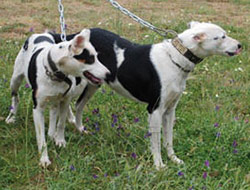
Adopted through Amor Podenco, her name is Chica and she was adopted when she was one year old, now she is three.

Introducing the Podenco Campanero and his crosses. A large-sized Andalusian podenco often crossed with Portuguese, Ibizenco or little-known mastiff and like so many podencos in Spain, also mistreated and humiliated for being part of the rehalas in the main hunt. Most of them are invisible because they remain their whole lives locked up in hunters’ kennels where they live crowded without seeing much sunlight.
They’re called BELLERS because on hunting days where they go in a hurry harassing the prey, a bell was placed around their necks…
How often have we heard it? A podenco chucked out by their hunter after a lifetime of devotion.
12 year old Flamenca deserves to live our the rest of her life knowing comfort, regular food and love. Contact Hope for Podencos if you can offer her such a home.


If you have spent time in Spanish towns or cities, you have probably seen them. Small groups of cats living around parks, plazas, alleyways, and empty lots. Usually there is a feeding station, sometimes a small shelter, and almost always a local volunteer quietly looking after them.
The funding for local authorities is focused on managing these feral cat colonies in a humane way, as required under Spain’s Animal Welfare Law. This usually means trap-neuter-return programmes, maintaining colony records, and ensuring basic health monitoring. Trap-neuter-return is the standard humane approach. Cats are captured, sterilised, and returned to their original colonies instead of being removed or culled. Over time, this stabilises populations, reduces disease, and allows cats to live safely in familiar environments with ongoing care.
A good example of how this looks in practice comes from Alhendín in Granada, where the municipality recently opened a “Cat Hotel.” It is a repurposed recycling container adapted to give colony cats shelter from heat, cold, and rain. It is a small project, but it shows how local authorities can adapt creatively when resources exist. (more…)