-
Stunning Podenca Flamenca hoping for a forever retirement home
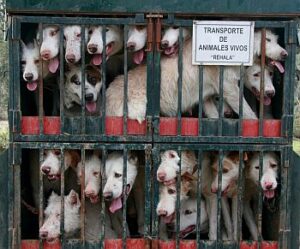
How often have we heard it? A podenco chucked out by their hunter after a lifetime of devotion.
12 year old Flamenca deserves to live our the rest of her life knowing comfort, regular food and love. Contact Hope for Podencos if you can offer her such a home.
-
In Los Infiernos Perrera, Murcia – desperately needs to be rescued
MALE IN THE KENNEL OF HELL. MURCIA.It’s in Los Infernos MurciaMale picked up in Fortuna 6/4/26 no chipContact (Spain) +34 650 65 07 84 -
Podenco Babu is looking for a forever home
You can read the story of why Babu is looking for a new forever home on this weblink.
We all take on our pets – be they dogs, cats, rabbits, horses – hoping that they will live their lives out with us. But we never know what is round the corner – ill health, a sudden death, loss of a rented home. And it can be heartbreaking for the adopter to have to make a decision to part with their beloved pet and find a new home for them. It’s also confusing for the animal, but most adapt much quicker than the person who has had to hand over their pet.
Lets hope that the next home for Babu is the only one he will ever have.
-
Scalibor collars – protecting dogs from contracting Leishmania
Scalibor collars are highly effective at protecting dogs against Leishmania. They contain deltamethrin, an insecticide and repellent that prevents sand flies—the carriers of the Leishmania parasite—from biting your dog.Key points on how they protect your dog:- Anti-feeding Action: The collar repels sand flies, significantly reducing the risk of them transmitting the parasite during a blood meal.
- Proven Efficacy: Studies show it reduces sand fly blood-feeding by up to 90%.
- Duration: The collar typically provides active protection against sand flies for 5 to 6 months (though some formulations/guidelines suggest longer tick/mosquito
Spanish rescue shelters are always desperate for Scalibor collars to protect their dogs in the summer. Please consider purchasing some for them.
Where in the world dogs are at risk from contracting leishmania.
-
Volunteering at a Spanish animal shelter

It’s not too late to volunteer at a Spanish rescue shelter for your holidays in 2026. Fundacion Benjamin Mehnert in Seville explains what is involved and how grateful the associations are for all the help they can get. Contact a shelter direct, they usually provide accommodation for volunteers too.
Other large shelter which would appreciate help are
Video of volunteering at Protectora Scooby Medina
-
Spanish funding for animal shelters and feral cat colonies

If you have spent time in Spanish towns or cities, you have probably seen them. Small groups of cats living around parks, plazas, alleyways, and empty lots. Usually there is a feeding station, sometimes a small shelter, and almost always a local volunteer quietly looking after them.
The funding for local authorities is focused on managing these feral cat colonies in a humane way, as required under Spain’s Animal Welfare Law. This usually means trap-neuter-return programmes, maintaining colony records, and ensuring basic health monitoring. Trap-neuter-return is the standard humane approach. Cats are captured, sterilised, and returned to their original colonies instead of being removed or culled. Over time, this stabilises populations, reduces disease, and allows cats to live safely in familiar environments with ongoing care.A good example of how this looks in practice comes from Alhendín in Granada, where the municipality recently opened a “Cat Hotel.” It is a repurposed recycling container adapted to give colony cats shelter from heat, cold, and rain. It is a small project, but it shows how local authorities can adapt creatively when resources exist. (more…)
-
Animal rescue could not operate without volunteers

Absolutely they are! Animal rescue, animal shelters, fostering, adopting, fund-raising. Animal rescue could not work without volunteers.
-
Podencos on Ibiza – abandoned to survive as best they can

Screenshot What most tourists to the Island of Ibiza don’t see.
ROMERO is one of the unwanted podencos living on the streets of Ibiza.
Some animal protectors care touchingly about the animals, many tourists alert us and other organizations on the run, others just want to get rid of the uninvited, unloved inhabitants of the island. Many of the wild living podenco/mixes do not survive the cold winter, often suffer from hunger or thirst, are injured and then go crazy. (more…)